
Auger drilling, grading, and post-hole prep. We get the ground ready first, so every post goes in straight, secure, and built to last.
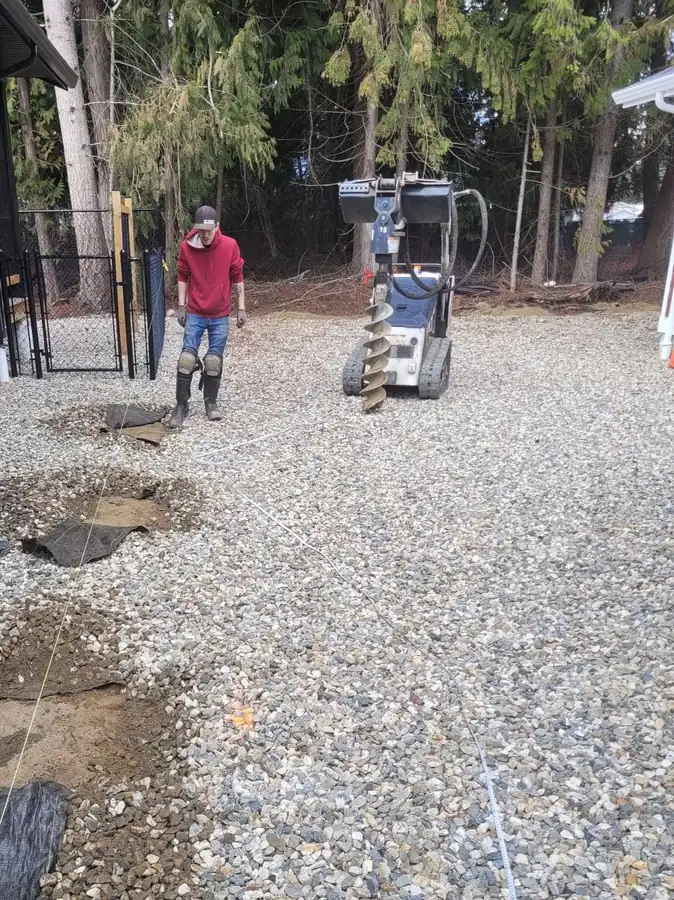
A fence is only as good as what's underneath it. Uneven ground, shallow holes, and poorly set posts are a common reason fences lean, gap, and start to fail years before they should. We drill and prep a site properly before any post goes in, whether it's for a fence of ours or ahead of someone else's build.
Hole drilling is the part of the job most people never see, but it has a lot to do with whether a fence stays straight for decades or starts leaning after a few hard freeze-thaw cycles. We drill to a consistent depth and diameter for the post and the soil type, including rock, clay, and hardpan ground that's difficult to get through by hand.
We also take on grading and site leveling ahead of a build, so the fence line follows the property instead of fighting an uneven yard. Typical work covers auger and post-hole drilling, grading and site leveling, footing and concrete post setting, and post setting on level or sloped ground.
Hole depth and diameter have a lot to do with whether a fence leans or gaps years before it should. Plenty of fence problems start below ground, not above it.
Rock, hard clay, and compacted ground stop a shovel fast. Auger equipment gets through it without turning the yard into a construction zone.
Machine-drilled holes are consistent and quick, which means less time spent digging and less disturbed ground around the fence line.
Getting drilling and grading sorted first keeps the fence line straight and avoids reworking posts once panels start going up.
With auger equipment sized to the post and the soil conditions, rather than by hand. It gets holes to a consistent depth and diameter, and it's quicker and tidier than digging manually.
Usually, yes. Rock, hard clay, and compacted or hardpan soil are common around here and we plan for them. We'll look at ground conditions ahead of time so we know what we're working with before drilling starts.
Yes. Hole drilling, grading, and post-setting prep can be taken on as a standalone job, including ahead of another contractor's build.
Depth depends on post height, soil type, and the local frost line, so it's set per project rather than a single fixed number. Holes are sized to hold the post securely over the long term.
Usually some combination of insufficient hole depth, freeze-thaw cycling in the ground, poor drainage around the post, or footing that wasn't set correctly. Careful drilling and setting up front avoids most of it.
Less than most people expect. Holes are localized to the post line, and grading is kept to where it's needed for the fence to sit correctly. We'll walk the site with you beforehand so you know what to expect.
Tell us about your property and we'll get back to you with a quote. Serving Salmon Arm, Vernon, Revelstoke, Sicamous, Armstrong, Enderby & Tappen.